Hours: Mon - Fri: 8AM - 5PM
2 Edmonton Locations West:780.733.0075 South:780.469.0075
BOOK APPOINTMENTHours: Mon - Fri: 8AM - 5PM
2 Edmonton Locations West:780.733.0075 South:780.469.0075
BOOK APPOINTMENT

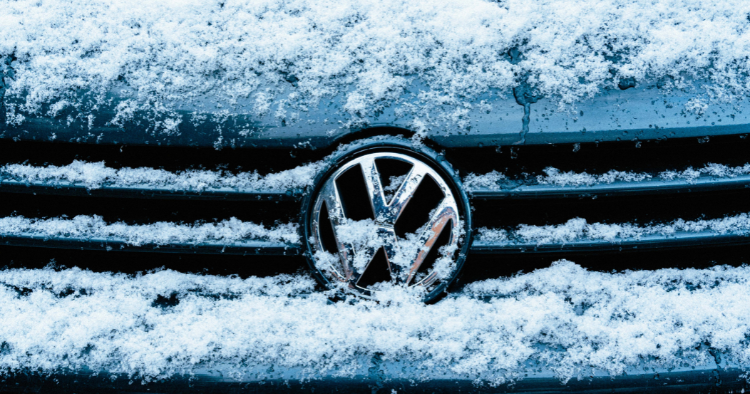
The first -25°C morning in Edmonton finds every weak spot in a vehicle. A battery that struggled in October fails outright, coolant topped
up with plain water stops protecting the engine, and a frozen door seal leaves you locked out in the cold. Our team has spent decades as a
Volkswagen maintenance mechanic in Edmonton, and we catch most of these problems in the fall, well before they strand anyone. The six checks
below run from the battery to the washer fluid, and if you'd rather have us handle them, book a pre-winter visit with Sandy Lane Auto.
A Volkswagen asks more of its electrical system in January than in any other month. Cold oil is thick, so the starter pulls extra current just to turn the engine over. The battery is at its weakest at the same moment, since the chemical reaction that produces power slows as the temperature falls. Then heated seats, a heated rear window, headlights and a blower fan all run at once. Even overnight in the driveway, the control modules keep drawing a small amount of power. Short winter trips finish the job, because the alternator never runs long enough to put back what the starter took out.
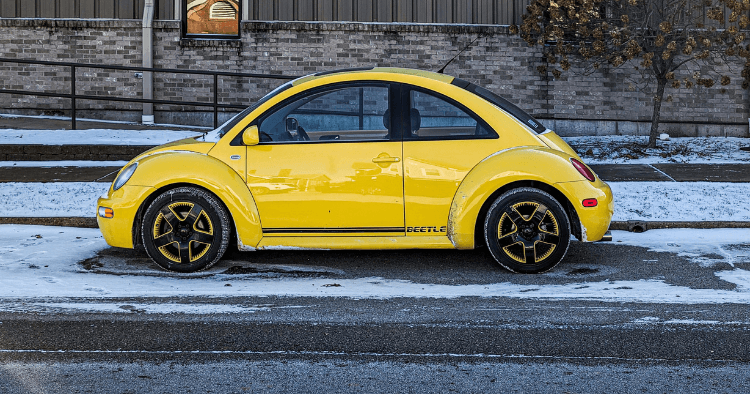
Get the battery tested in October or early November, before the cold makes the decision for you. A load test shows how the battery performs
under demand, which a simple voltage reading cannot. A battery can read fine in a warm shop and still fail at -20°C.
Many newer Volkswagens, especially those with start-stop, use AGM batteries, so the test needs equipment built for them. When a replacement is needed, the new battery should be registered with the car's battery management system, or the car will not charge it correctly. Slow cranking, dim headlights at idle and a battery warning light all mean you should book sooner. Any battery past four or five years old deserves a test, even if it has never given you trouble.
Coolant has two jobs beyond keeping the engine cool. It stops the system from freezing, and its additives keep corrosion from eating the engine and radiator from the inside. A 50/50 mix with distilled water protects to around -35°C, which covers a typical Edmonton winter.
Coolant that has been topped up with plain water over the years falls well short of that, and a hard freeze can crack a component that costs far more than the coolant did. Volkswagen also specifies coolant by type, and mixing the wrong ones can break down the additives and leave deposits behind. Our Volkswagen maintenance mechanics test the concentration with a refractometer and check the hoses, the reservoir and the water pump area for leaks. If your level keeps dropping, the leak needs finding before the next top-up.
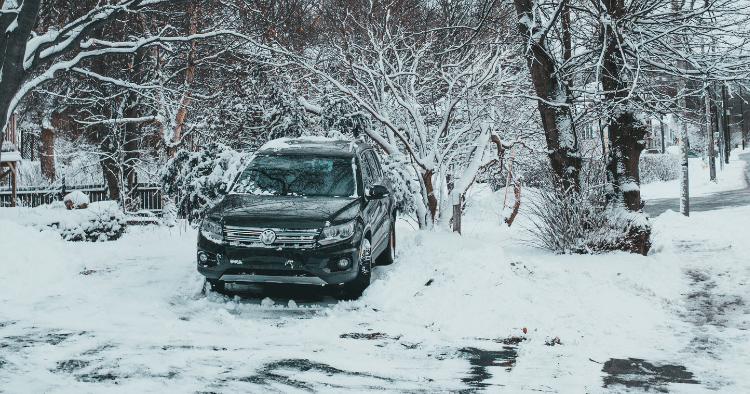
Winter tires are the biggest safety upgrade you can make for Edmonton driving. Look for the three-peak mountain snowflake on the sidewall,
which means the tire passed severe snow testing. All-season rubber stiffens once the temperature falls below about 7°C, so grip drops on
cold, dry pavement as well as on snow. Get the winter set on before the first snowfall, and have the tread measured while the old set is
off.
Cold air also pulls tire pressure down, by roughly 1 psi for every 5°C. Your Volkswagen's monitoring system will warn you, but a monthly check with a good gauge catches the drop sooner. Use the pressure on the sticker inside the driver's door jamb, not the number moulded into the tire. If the warning light stays on after you've topped up, a sensor may need attention.
A door that is frozen shut can tear its own seal when you pull the handle. Wipe the seals clean and apply a silicone-based rubber
conditioner, which sheds water and keeps the rubber soft. Do the trunk and sunroof seals while you're at it.
Washer lines freeze the same way. Summer fluid or plain water can ice up in the reservoir and lines, which can crack the reservoir or damage the pump. Switch to winter fluid rated for -40°C before the cold arrives, and run the system until the new fluid reaches the nozzles. Road salt uses fluid fast on Edmonton streets, so keep a spare jug in the trunk. Ice and salt are hard on wiper blades too, so check them at the same time.
A checklist only works if it fits on one page and has a deadline. Aim to finish by the end of October. Start with the battery load test, then move through coolant concentration, the tire swap and pressure check, seal conditioning and washer fluid. Add a quick look at wiper blades, lights, brakes and oil level.
Keep a winter kit in the car with a blanket, a flashlight, booster cables, a small shovel and an ice scraper. When a Volkswagen maintenance mechanic in Edmonton handles the battery, coolant and tire items, the rest takes about ten minutes in your driveway. Our team at Sandy Lane Auto can cover every inspection item in one visit, so you leave knowing where your vehicle stands.
Test it once before winter starts, and again if you notice slow cranking or dim headlights. A battery older than four years also benefits from a second check in January.
The right type depends on your model and year, so check your owner's manual or ask our team before adding any.
Get in touch with us at Sandy Lane Auto today, and we'll get your Volkswagen ready before the first cold snap.
780.733.0075
15820 - 111 Ave NW
Edmonton, AB T5M 2R8
780.469.0075
8105 Argyll Rd NW
Edmonton, AB T6C 4B2